ServicesWhole Home Water Filtration
Whole Home Water Filtration in Murfreesboro
We install whole home water filtration that treats every tap, shower and appliance in your home, not just the kitchen sink. First we test your water and explain which system fits. Then we put the full scope and price in writing so you know what you are paying for.
Filtered water at every tap, matched to what's in yours
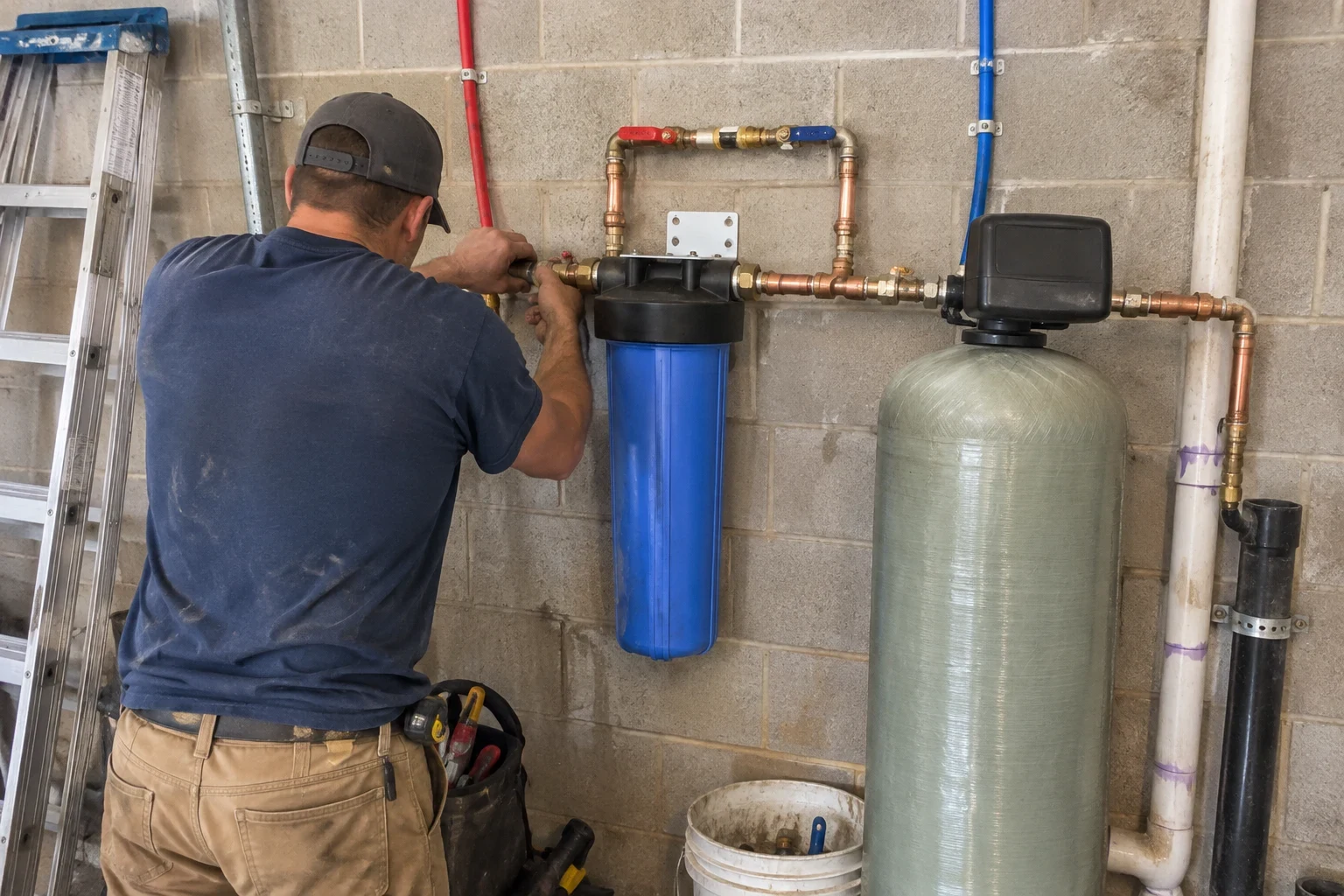
We mount the equipment right after your main line comes into the house, often in the garage, basement, crawlspace or a utility closet. From there it cleans the water before any of it reaches a faucet or appliance. That means better water for drinking and cooking, plus your showers, laundry, dishwasher and water heater.
Much of Middle Tennessee sits on limestone, so hard water and scale are common. Many people also notice a disinfectant taste in city water. Homes on a private well can have sediment or iron instead. The right setup depends on which of these you actually have, so we start with a test, not a sales pitch.
We hold a Tennessee CMC-A plumbing license. Every system goes in to code, with shutoffs and a bypass so it can be serviced without fuss.
What the installation includes
- Water testing first
- We check hardness, chlorine, iron, pH and sediment at your home. The recommendation follows the results. If a lab test would give a well owner a clearer picture, we will say so.
- Equipment sized to your home
- We size the system to your peak flow and number of bathrooms, so pressure holds when two showers run at once. Depending on your water, that may be a sediment prefilter, carbon filtration, a softener or a combination.
- Bypass and shutoff valves
- Every install gets isolation valves and a bypass loop. You keep water to the house during cartridge changes or service.
- Drain lines with backflow protection
- Softeners and backwashing filters need a drain line with a proper air gap, so wastewater can never siphon back into your supply. Our team is backflow certified, and we set these connections up the way the code intends.
- A clean connection to your main
- We cut in neatly and use fittings matched to your pipe material. Then we pressure-test every joint and clean up the work area before we go.
- A walkthrough and filter schedule
- Before we leave, we show you how the bypass works, which cartridges to change and about how often for a household your size.
How to tell your water needs treatment at the main
Chalky buildup on faucets and glass
A whitish film on faucets, showerheads and shower doors is a classic sign of hard water. The same minerals are quietly building up inside your water heater, dishwasher and washer.
Tight skin and scratchy towels
Minerals keep soap from rinsing clean. If your skin feels dry after showering and towels come out of the dryer rough, hard water is a likely reason.
A swimming pool taste
Stocking bottled water or constantly refilling a pitcher filter because of a chlorine taste or smell is a sign carbon filtration at the main would help every tap in the house.
Rust-colored rings
Orange or brown stains in toilets and sinks usually point to iron, which shows up often in well water. Taking it out protects fixtures and keeps white laundry from turning yellow.
Popping from the water heater
Rumbling or popping sounds usually mean scale and sediment have settled in the tank. Treating water upstream makes a real difference, especially before a tankless water heater installation, since scale wears on heat exchangers.
Sand in faucet screens
Grit clogging aerators and showerheads calls for a sediment prefilter.
What moves the price of a filtration system
Filtration pricing swings more than most plumbing work, because no two homes or water supplies are quite alike. Your written quote walks through each factor below, so nothing gets tacked on once the job starts. We take cash and all major credit cards, and if paying over time fits your budget better, ask us about our financing options.
What your test turns up
Hard water by itself usually needs only a softener or conditioner. If the test also shows iron, a sulfur smell or sediment, you may need two or more stages.
Size of your home and household
More bathrooms and heavier peak use call for a bigger tank or higher-flow housings, so pressure stays strong when everyone is running water.
Install location
Mounting on an open garage wall near the main is straightforward. A cramped crawlspace, or a spot that needs new piping run to it, takes more time. Softeners also need a drain and an outlet close by.
Your pipes near the main
Copper, PEX and older galvanized lines each connect differently. If the pipe where we tie in is worn, we show you and price any needed changes before work begins.
Long-term upkeep
Cartridge sizes, salt use and media life vary from system to system. We list the expected maintenance so you can weigh the cost over the years, not just on install day.
How a filtration install goes
- 1
Your call and our visit
You call, and we set a time to come out. We look at where your main enters, test the water and ask how your household uses it.
- 2
A written quote
You get a written quote listing the equipment, parts, labor and any drain or electrical work the system needs. If something we find during the job would change the scope, we stop and talk with you before doing anything extra.
- 3
Installation day
Most installs take part of a day. We keep the water off as briefly as we can, protect floors along our path, plumb in the system with its bypass and drain, and pressure-test everything.
- 4
Startup and walkthrough
We flush the system, program the softener if you have one, retest the water and show you the controls. Our work is backed by a 2-year warranty.
Questions about whole home water filtration
Do I need a softener or a filter?
They solve different problems. A softener removes the minerals that cause scale, while a carbon filter handles chlorine taste, odor and some chemicals. Plenty of homes benefit from both. If your test shows only one issue, we recommend only that.
Will a whole home system lower my water pressure?
Not if it is sized correctly for your home. When people do lose pressure after an install, the cause is almost always equipment too small for the house or cartridges left in long past their change date. We match the system to your peak flow and show you how to tell when a cartridge is due.
I'm on a well. Can you help?
Yes. Well water often needs a different setup than city water, such as a sediment prefilter or iron treatment. We test at your tap and may suggest a lab test before recommending equipment.
Will I be without water during the install?
Only while we cut into the main and make the connections, which is a small part of the day. We tell you before we shut it off and turn it back on as soon as the joints are tested.
What if something goes wrong after it's installed?
Call us and we will sort it out. If a problem cannot wait, we offer 24/7 emergency plumbing service. We also serve nearby towns such as Smyrna, La Vergne and Mount Juliet.
Find out what's really in your water
Call and we will set up a free estimate, test your water and leave you a written quote to read at your own pace. There is no pressure to decide on the spot.